 5.0
5.0 9.82
9.82 
End of Tenancy Clearance: What to Do With Everything You Cannot Take With You
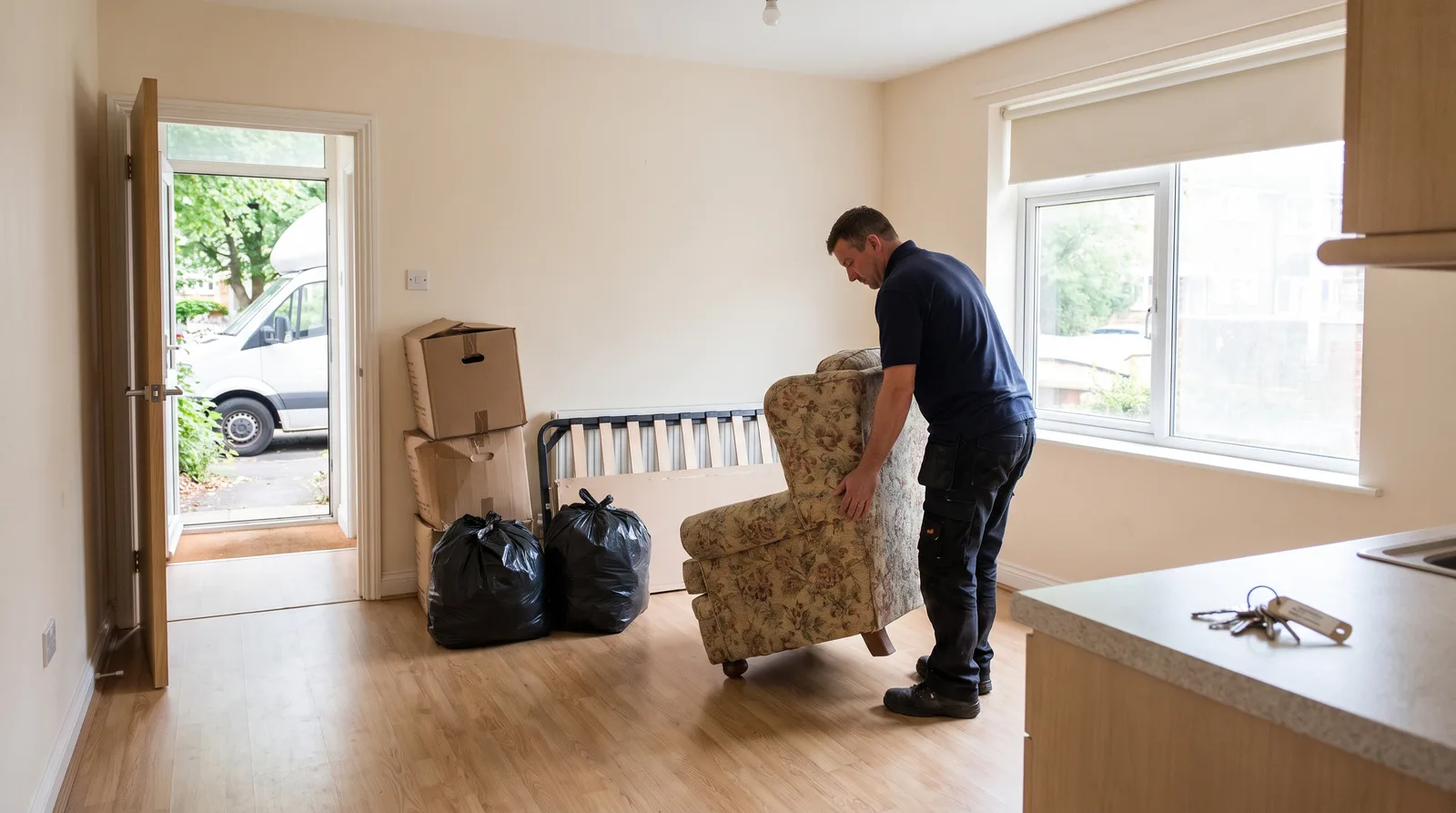
Most end of tenancy advice is about cleaning. Very little of it deals with the thing that actually derails people in the last week: the sofa that will not fit in the new flat, the wardrobe that came with the room, the four bags in the loft you have not opened since you moved in.
Leftover items are one of the easiest deposit deductions to avoid and one of the most commonly overlooked. A landlord can charge for removing belongings and rubbish left behind, provided the deduction is fair, reasonable and backed by evidence. An empty property costs nothing to hand back. A property with a broken bed frame in the second bedroom is a bill.
This guide covers what to do with everything you cannot take, in what order, and how clearance fits around cleaning and the checkout inspection. It is written for tenants first, with a section at the end for landlords and letting agents dealing with a property that has been left full.
One thing to be clear about from the start: this is about clearance, meaning emptying the property of furniture, belongings, bulky items and rubbish. It is a separate job from end of tenancy cleaning, which is a specialist trade with its own standards. We do clearances and removals, not cleaning, and you will want to book both. The order matters, and we come back to it below.
Start with the inventory, not the skip
Before you throw anything away, find your check-in inventory. It is the document that decides what is yours and what is not, and it is the document any dispute will be judged against.
You must return the property in the condition recorded at check-in, allowing for fair wear and tear. That cuts both ways. It means you take your own things with you, and it also means you leave the landlord's things where they are.
This second part surprises people. You should not remove or dispose of the landlord's furniture or appliances listed on the inventory, even if the item is broken, ugly or something you never used, unless you have written consent. A tenant who helpfully takes a knackered chest of drawers to the tip has removed a landlord's asset, and that is a replacement charge rather than a thank you.
Work through the inventory room by room and mark each item as yours, theirs, or disputed. Anything genuinely unclear is worth an email to the agent now, while there is time to get an answer in writing. Shelter's guidance on deposit deductions for damage and missing items is a useful reference if you are not sure where the line sits.
The places everyone forgets
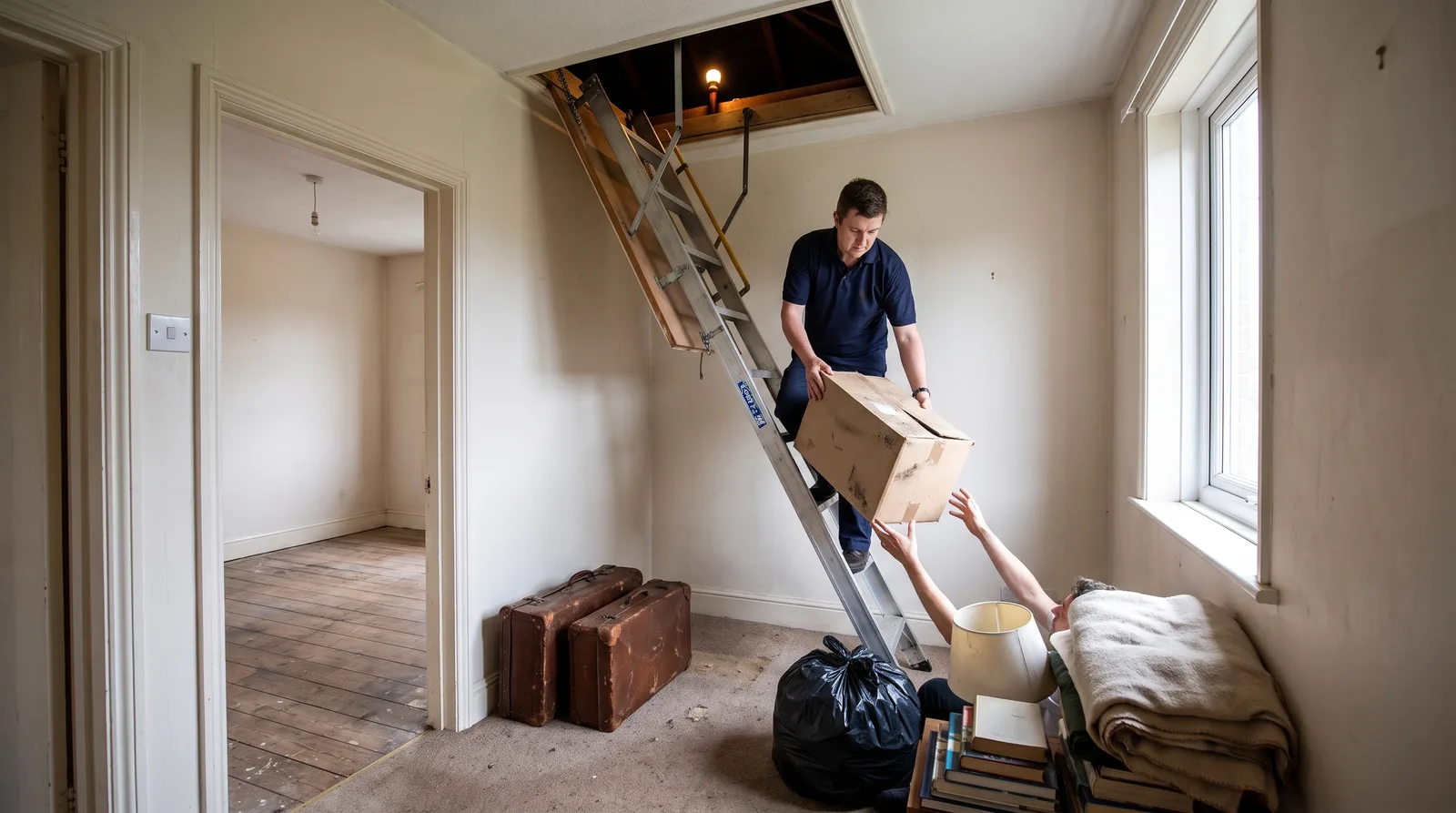
The rooms you live in get emptied naturally. The problems are the spaces you stopped noticing months ago. Walk the property with a list and check:
- The loft. The single most common one. Ladders down, torch on, nothing left.
- The garden. Pots, a rusted barbecue, bags of compost, garden furniture, a broken parasol.
- The shed or garage. Paint tins, tools, bikes, tyres, anything inherited from the previous tenant.
- The communal bike store or bin area. Leaving something here is not clearing it, and in a block it is likely to be charged back.
- The meter cupboard and airing cupboard. Where spare bedding and old paint quietly accumulate.
- Under the stairs and the top of wardrobes. Suitcases, boxes, a hoover that stopped working.
- The freezer. It will need defrosting, and whatever is in it needs to go before you turn it off.
- Behind and under white goods. Not clearance exactly, but it is where the checkout report finds things.
Take a photograph of each empty space once you have done it. The photographs are worth as much as the work.
What to do with each category of item
Once you know what is leaving, sort it into five piles. Each one has a different route out of the building, and the routes have very different lead times.
Sell. Anything with real resale value, especially larger furniture in good condition. Start early, because collection has to happen before your last day and buyers are unreliable. Be honest with yourself about what will actually sell in the time you have.
Donate. Charity shops will take furniture and household goods in good condition, though sofas and armchairs need the fire safety label still attached, and many shops need to arrange collection for bulky items rather than accept a drop-off. Ring first and book a slot. This takes longer than people expect in the last week of a tenancy.
Give away. Local giving groups and community pages clear usable items fast and free. The trade-off is reliability, so do not leave a single large item to this route on the final day.
Council collection. Sutton Council operates a bulky waste collection service, and there is a household reuse and recycling centre for items you can transport yourself. Both need checking in advance for what they will accept, what it costs and how long the wait is for a slot, which at busy times can be several weeks.
Clearance. Everything left over, everything broken, and everything you have run out of time for. This is where a booked clearance does in one visit what would otherwise take you four weekends.
Our end of tenancy clearances in Sutton and end of tenancy clearances in Carshalton pages cover how that works for rented property. If you are clearing a home you own, rather than a rental, a house clearance in Carshalton is the equivalent service and covers probate, downsizing and pre-sale clear-outs.
Why leaving it is the expensive option
There are two versions of leaving it, and both cost more than dealing with it.
The first is leaving items in the property. This is straightforwardly chargeable. The landlord pays someone to remove them and deducts the cost, and because it is a small job arranged at short notice it is rarely cheap.
The second is worse. Leaving items in a communal hallway, next to the bins, or on the pavement outside is not disposal. Depending on where it ends up it can be treated as fly-tipping, which is an offence, and in a managed block the freeholder will typically remove it and charge it back through the building. A sofa left beside a bin store is a bill with your name on it, not a solved problem.
Neither is a judgement about anyone's organisation. Both usually happen because the clearance was left until the day, and by then every route out except one has closed.
Things you want to keep but cannot take yet
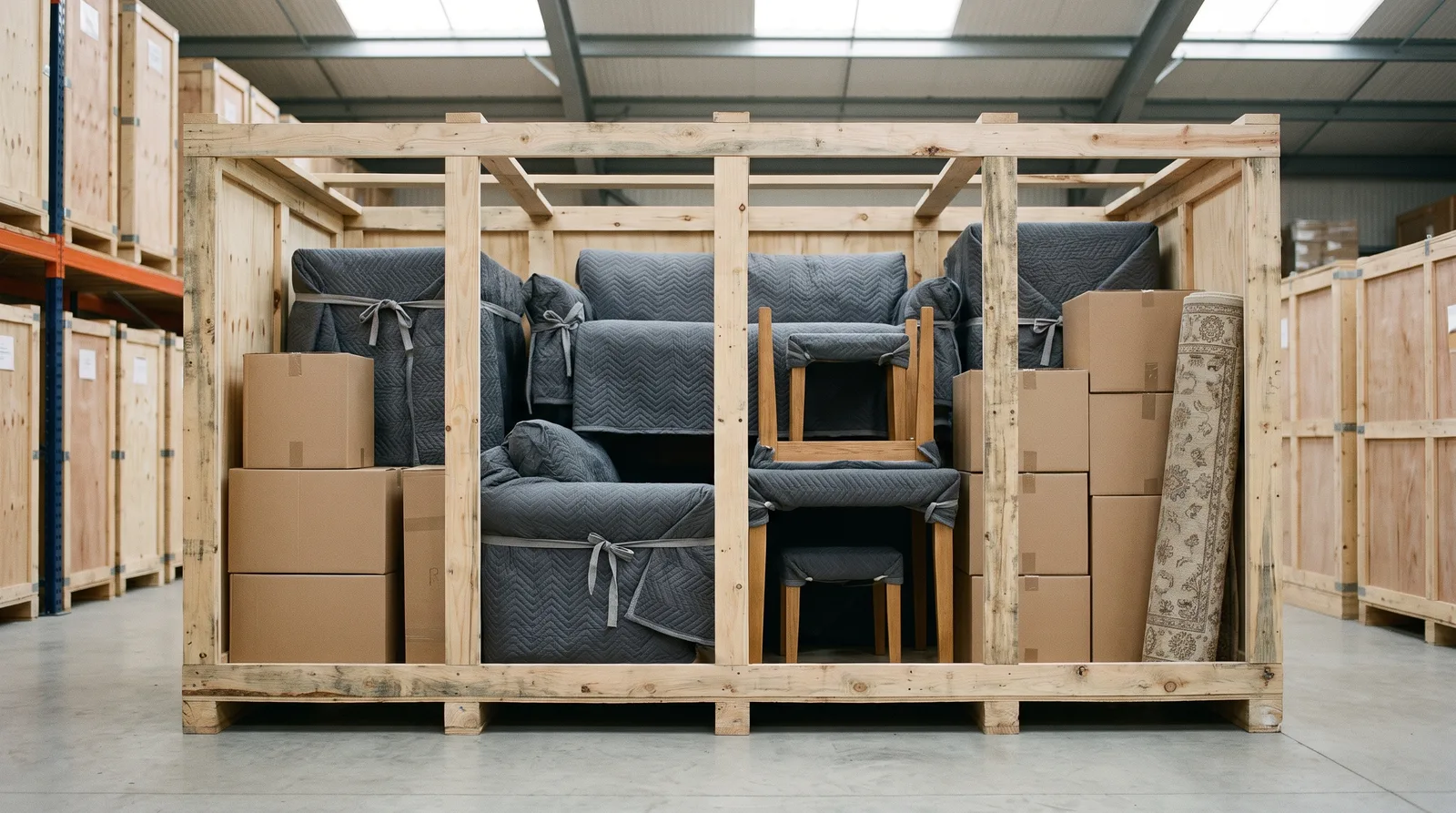
Not every leftover item is unwanted. Sometimes the new place is smaller, sometimes it is not ready, sometimes there is a gap between the tenancy ending and the next one starting.
Short-term storage solves this, and it is a genuinely different decision from disposal. It is worth it for furniture you would otherwise have to buy again, for things you are keeping for a specific reason, and for the gap between two dates that do not line up. It is rarely worth it for items you are storing because you have not decided about them, since that decision does not usually get easier.
We can arrange short term storage from £20 per container per week (+VAT), which is often the cheapest way to bridge a few weeks between tenancies. If the items are coming with you, a man and van in Sutton can run them straight to the new address, and a full house removals booking covers the larger moves.
Getting the order right
This is the part that goes wrong most often, and it is easy to fix.
Clear first. Clean second. Inspect third.
Cleaning a property that still has furniture in it is close to pointless, because you cannot clean the floor under a wardrobe that is still there, and the marks left behind when it goes will not be in the cleaner's report. Cleaners will also usually not move heavy furniture, so anything left in place is simply not cleaned.
A workable sequence for the final fortnight:
- Two weeks out. Inventory review done. Sell, donate and council collections booked. Clearance booked for a date that leaves buffer.
- One week out. Sales and donations collected. Non-essentials packed. Loft, shed and garden emptied.
- Two or three days out. Removals or man and van moves your belongings to the new address. Clearance takes everything that is not coming.
- The day before checkout. Cleaning, on an empty property.
- Checkout day. Final walk-through, photographs, meter readings, keys handed over.
If your dates are tight, the clearance and the cleaning can happen on the same day as long as the clearance is first and both parties know the plan. What does not work is booking the cleaner for the morning and the clearance for the afternoon.
What to record at checkout
Deposit disputes are decided on evidence, and the tenant who has photographs usually does better than the one who does not.
- Dated photographs of every room, empty, including the loft, shed, garden and cupboards
- Photographs of the inside of appliances, especially the oven and fridge
- Meter readings, photographed with the display showing
- Your copy of the checkout report, and your written comments on anything you disagree with
- Receipts for cleaning, clearance and any repairs you arranged
- The forwarding address you gave, in writing
Under the Tenant Fees Act 2019, a landlord in England cannot require you to use a specific professional cleaning company. They can require the property to be returned to the standard recorded at check-in. If you cannot agree on deductions, your deposit protection scheme provides a free dispute resolution service, and it is designed to be used without a solicitor. The GOV.UK page on tenancy deposit protection explains how that works.
For landlords and letting agents
If a tenancy has ended and the property has been left full, the practical problem is usually time rather than volume. A void week costs more than the clearance does, and the next tenancy cannot be marketed properly with someone else's furniture in the photographs.
What helps:
- Photograph and document everything left behind before anything is moved, since the record supports any deduction
- Get the clearance booked as a single visit rather than in pieces
- Deal with the possessions question properly, as belongings left behind are subject to specific rules about notice and reasonable steps to return them, and the deposit scheme will expect you to have followed them
- Sequence the clearance before the clean and the inventory check, for the same reason tenants should
We work with landlords and agents across the borough on changeovers, and can usually turn around a clearance at short notice. If the changeover also involves moving a tenant's belongings into storage, that can be handled in the same visit.
FAQs about end of tenancy clearance
Can my landlord charge me for leaving furniture behind?
Yes, if the deduction is fair, reasonable and evidenced. The cost of removing belongings and rubbish left in the property is a normal, allowable deduction from the deposit.
Is end of tenancy clearance the same as end of tenancy cleaning?
No. Clearance means emptying the property of furniture, belongings and rubbish. Cleaning means cleaning the empty property to the standard recorded at check-in. They are separate jobs, usually booked with different companies, and the clearance needs to happen first.
Can I throw away the landlord's broken furniture?
Not without written consent. If an item appears on the check-in inventory it belongs to the landlord, and removing it can be treated as a missing item and charged as a replacement, even if it was broken.
What is the cheapest way to get rid of furniture at the end of a tenancy?
Selling or giving it away costs nothing, but both need lead time and neither is reliable in the final few days. Council bulky waste collection is inexpensive but often has a wait. A booked clearance costs more than those but deals with everything at once, which is usually the cheaper option once you count a missed checkout or a deposit deduction.
How long does an end of tenancy clearance take?
Most flats and small houses are a few hours. It depends far more on access, floor level and parking than on the volume of items. Telling us about stairs and parking when you book is what makes the estimate accurate.
Can you clear the property on the same day I move out?
Often yes, though it is better to have a day of buffer before the cleaning and the checkout inspection. Tell us your checkout date when you enquire and we will work backwards from it.
Do you take everything, including rubbish?
Furniture, appliances, general household items and the bags and boxes left over, yes. Certain categories such as hazardous materials are handled differently and are worth mentioning when you book so nothing is a surprise on the day.
Booking a clearance
The useful things to tell us are the property type and floor, the checkout date, roughly what is being left, and what the parking is like outside. From that we can give you a realistic price and a slot that leaves you room before your inspection.
SJC Movers Ltd is a family-run company based in Carshalton Beeches, working across Sutton, Carshalton, Wallington, Cheam, Morden, Mitcham and Croydon. For a rented property, see end of tenancy clearances in Sutton, or get in touch and tell us your checkout date.